Pe scurt
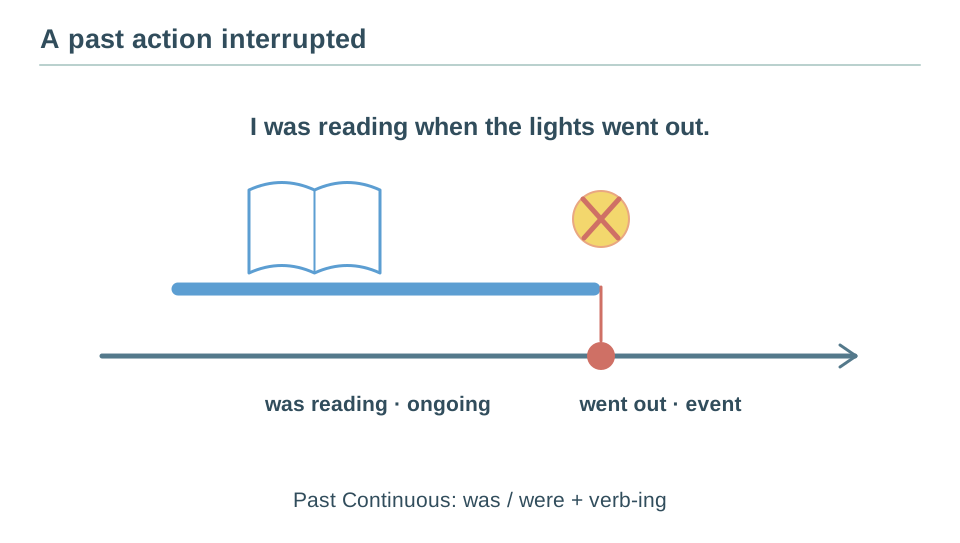
Past Continuous descrie o acțiune în curs la un moment trecut. Îl formezi cu was sau were și verbul cu -ing: I was reading; they were waiting. O altă acțiune, mai scurtă, poate interveni la Past Simple: I was reading when the lights went out. While introduce adesea un interval: While we were waiting, it started to rain. Nu transforma toate verbele unei povești în Past Continuous; evenimentele care mută povestea înainte rămân, de obicei, la Past Simple. Într-o știre scurtă, identifică întâi cadrul, apoi evenimentul principal. Expresia at eight last night fixează momentul și ajută la alegerea timpului.
Un elev povestește: We were crossing the park when we heard a loud bell. Mia was carrying the map, and I was looking for the exit. Then a guide opened the gate. Traversarea și căutarea constituie cadrul; auzul clopotului și deschiderea porții sunt evenimente. Dacă întrebi What was Mia doing?, răspunsul este She was carrying the map. Dacă întrebi What happened next?, răspunsul urmărește acțiunea ghidului. Cele două întrebări cer informații diferite din același text.
Exemplu rezolvat. Povestește: „Ieri, la ora opt, ploua, iar eu îmi făceam temele, când a sunat telefonul.”
- Cadrul de fond este în desfășurare: It was raining. (Past Continuous)
- Acțiunea întreruptă este tot în desfășurare: I was doing my homework.
- Evenimentul scurt care o întrerupe este la Past Simple: the phone rang.
- Leagă cu when: It was raining and I was doing my homework when the phone rang.
Pentru două acțiuni care durează în același timp folosește while: While I was reading, my brother was playing. („În timp ce citeam, fratele meu se juca.”)
Un alt exemplu: At eight last night, we were watching a film. („Aseară la opt ne uitam la un film.”) Întrebarea: What were you doing at eight? Răspunsul scurt: I was sleeping. („Dormeam.”)
Reading
Citește povestea de la parc și observă ce se petrecea în fundal și ce eveniment l-a întrerupt.
Last Saturday, my friends and I were walking home through the park at about six o'clock. The sun was setting, and a few children were still playing near the lake. Mia was carrying a big bag of apples, and I was looking at my phone. Suddenly we heard a loud noise. A small dog was running across the path, and its owner was shouting behind it. Some people on the benches were watching us and smiling. While Ben was trying to catch the dog, Mia dropped her bag. The apples rolled everywhere! We were laughing when the owner finally arrived. He thanked us and gave us a bag of sweets. Then we collected the apples and went home, still smiling.
Cuvinte noi: lake – lac; suddenly – deodată; path – potecă; owner – stăpân; rolled – s-au rostogolit; sweets – bomboane
Traducere: Sâmbăta trecută, prietenii mei și cu mine mergeam spre casă prin parc, pe la ora șase. Soarele apunea, iar câțiva copii se mai jucau lângă lac. Mia căra un sac mare cu mere, iar eu mă uitam la telefon. Deodată am auzit un zgomot puternic. Un câine mic traversa în fugă poteca, iar stăpânul lui striga în urma lui. Câțiva oameni de pe bănci se uitau la noi și zâmbeau. Pe când Ben încerca să prindă câinele, Mia și-a scăpat sacul. Merele s-au rostogolit peste tot! Râdeam când a sosit, în sfârșit, stăpânul. Ne-a mulțumit și ne-a dat o pungă cu bomboane. Apoi am strâns merele și am plecat acasă, tot zâmbind.
Cerințe
- Ce căra Mia? Răspuns: Un sac mare cu mere, justificat cu citatul din text: «Mia was carrying a big bag of apples».
- Adevărat sau fals: câinele stătea nemișcat pe potecă. Răspuns: Fals, câinele fugea pe potecă, justificat cu citatul din text: «A small dog was running across the path».
- Ce făcea Ben când Mia și-a scăpat sacul? Răspuns: Încerca să prindă câinele, justificat cu citatul din text: «While Ben was trying to catch the dog, Mia dropped her bag».
- Alege varianta corectă: ce făceau prietenii când a sosit stăpânul? a) râdeau; b) plângeau; c) fugeau. Răspuns: a) râdeau, justificat cu citatul din text: «We were laughing when the owner finally arrived».
- Ce le-a dat stăpânul câinelui? Răspuns: O pungă cu bomboane, justificat cu citatul din text: «gave us a bag of sweets».
Listening — Va urma
În mesajul oral, urmărește ce făcea personajul când a intervenit noul eveniment.
Greșeli frecvente
- Greșit: „They was waiting.”Corect: „They were waiting.” (they cere were)
- Greșit: „I was read when he called.”Corect: „I was reading when he called.” (was + verb cu -ing)
- Greșit: „While I did my homework, the phone rang.”Corect: „While I was doing my homework, the phone rang.” (acțiunea în desfășurare se exprimă cu Past Continuous)
- Greșit: „What was you doing?”Corect: „What were you doing?” (you cere were)
Testează-te pe această lecție
Lecția o citești aici, fără cont. Testele pe lecții și capitole sunt în cont, cu grile originale Didaxis și explicația fiecăreia: gratuit 10 grile pe zi, fără limită cu Premium, 49 de lei pe lună pentru fiecare copil.
Înainte și după
Surse și referințe
Redactare proprie, conform programei:
- OMEN 3393/28.02.2017, anexa 2, Limba modernă 1, p. 12; PDF local: documentatie/cercetare/curriculum-0-12-20261012/gimnaziu/19-limba-moderna1.pdf; exemplele și itemii de engleză sunt redactare proprie. rocnee.eu
Documente consultate
Desene: Redactare proprie (desen original), conform OMEN 3393/28.02.2017, anexa 2, Limba modernă 1, p. 12; rocnee.eu